Giant dunes can disturb the wind…
– Introduction
Turbulent flow over complex terrain plays a key role in many environmental and geophysical systems, such as wind power, wave formation and dune dynamics. Compared to hills and mountains, aeolian sand dunes, due to their smooth and scalable shapes, are ideal for studying wind-topography interactions. While topography feedback on wind speed has been largely quantified an understood, much less is know about the wind direction, particularly for giant dunes, less studied for practical reasons. While the spatial and temporal resolution of global atmospheric models keeps improving, their habilility to reproduce precisely near-surface winds remains to be assessed.
- Can global atmospheric models predict near-surface winds in arid areas?
- Do giant dunes signficantly affect the atmospheric flow?
– Methods
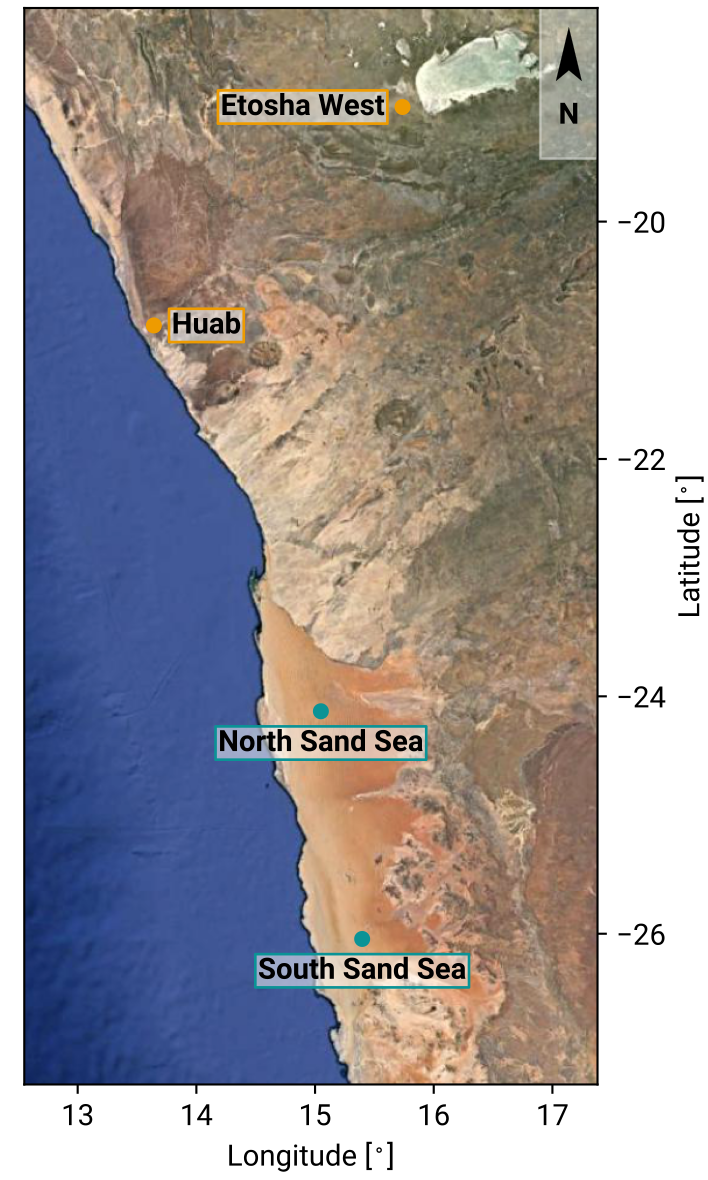
4 different places in the Namib desert:
- regional winds: ERA5-Land (climate reanalysis)
- local winds: in situ measurements
Relatively flat
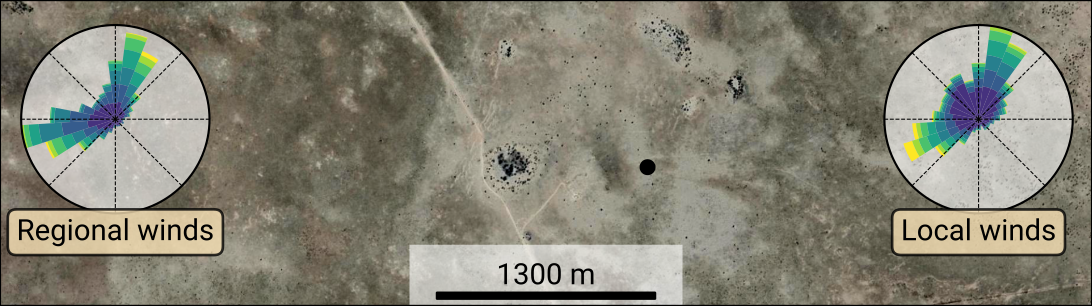
Agreement between regional (ERA5) and local winds !
Between giant dunes
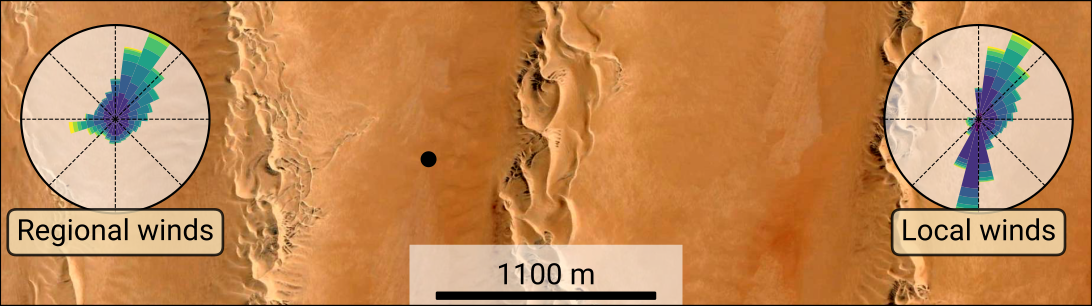
Local along-dune redirection of weak regional winds at night
…affecting smaller-scale bedforms in the interdune!
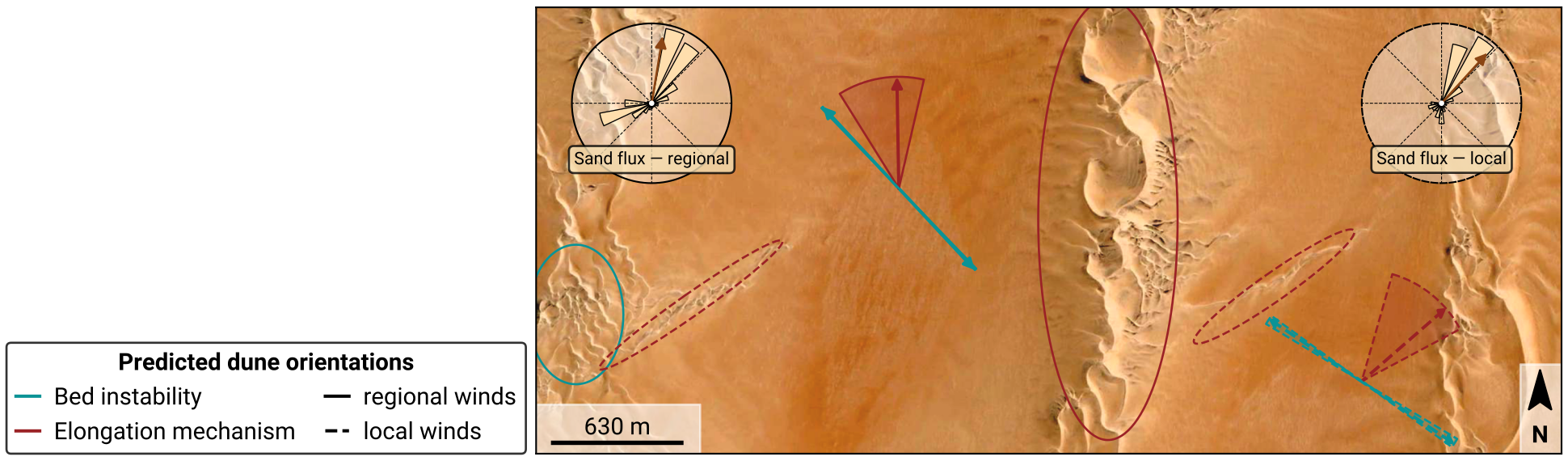
– Interpretation: flow regimes
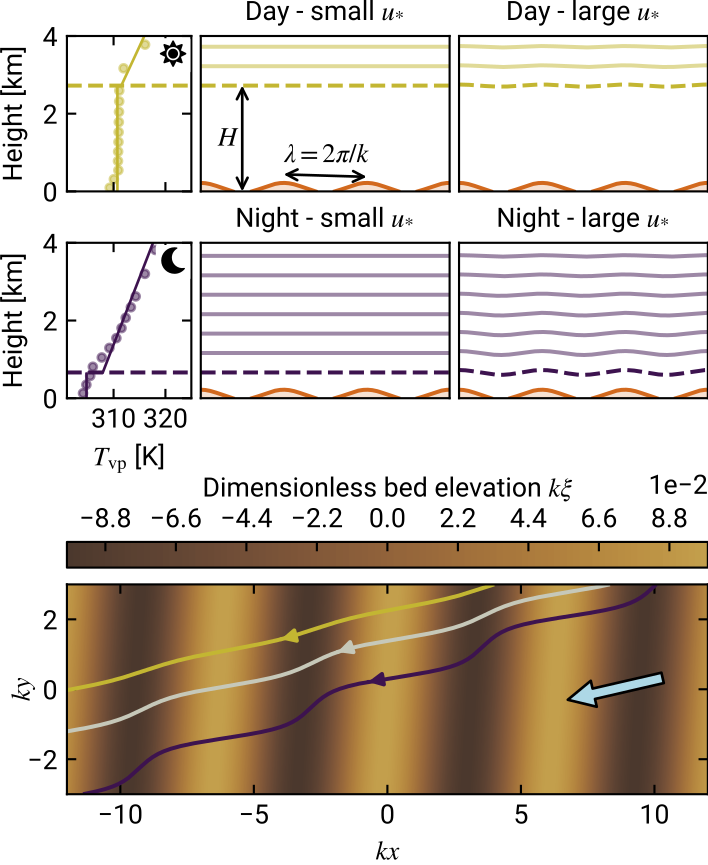
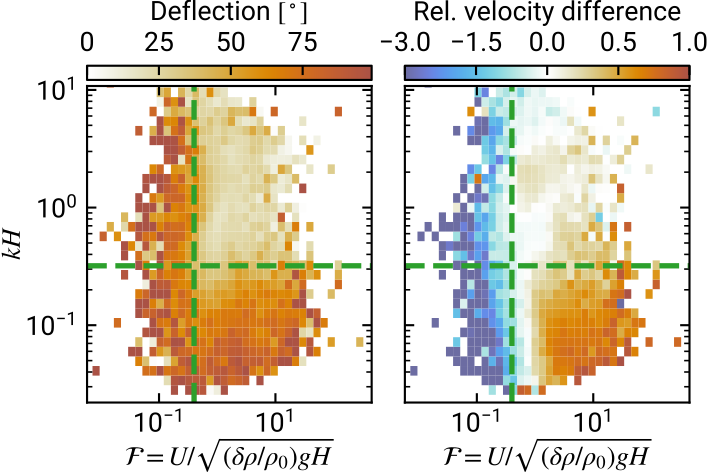
Two parameters controlling flow confinement by the Atmospheric Boundary Layer (ABL):
- relative ABL height: \(kH\)
- flow Froude number: \(\mathcal{F} = U/\sqrt{(\delta\rho/\rho_{0}) g H}\)
– Conclusion
- good wind prediction from climate reanalyses if no subgrid significant topographies
- giant dunes significantly disturb the wind in the interdune
- this changes the morphodynamics of small scale bedforms in the interdune
- confinement by the ABL controls the flow disturbances